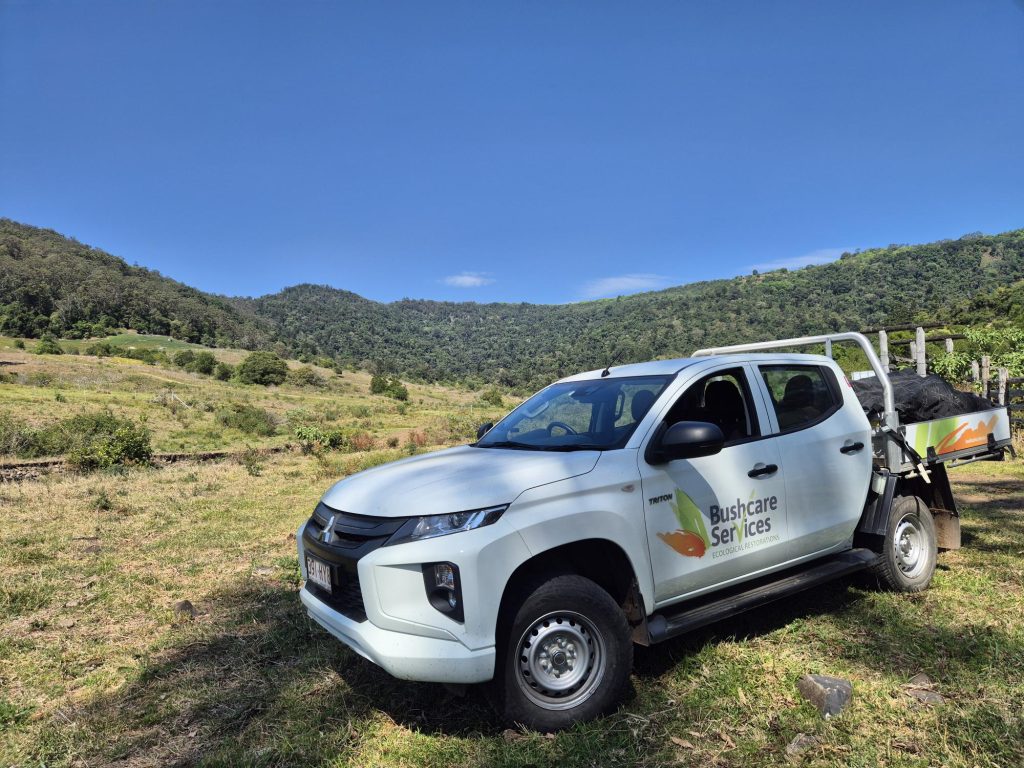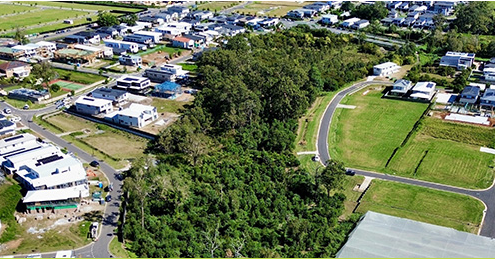

Steep terrain. Remote access. Dense weed infestations.
For large-scale restoration projects, the challenge is often finding the balance between effective weed control, project cost and protecting the native vegetation already doing the work of recovery.
At Bushcare, we believe mechanical weed control has an important place in that balance.
Specialised machinery and attachments allow us to tackle dense weed infestations at a landscape scale, replacing some of the labour-intensive work that can make difficult sites prohibitively expensive to restore. It is not a one-size-fits-all solution. But where the alternative is extensive manual clearing—or the work simply not being tackled at all—a carefully managed mechanical approach can deliver a strong result.
Choosing the Right Machine for the Site
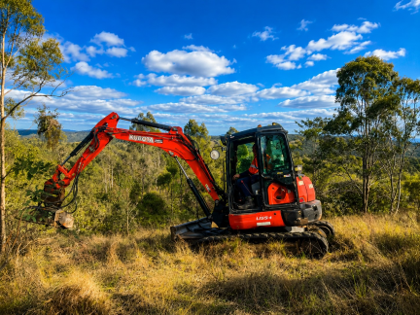
The excavator is only one of Bushcare's mechanical vegetation-management options.
Our operators work across a wide range of environments—from heavily degraded landscapes dominated by invasive weeds through to more sensitive bushland where natural regeneration is actively occurring. The machinery and methodology need to change with those conditions.
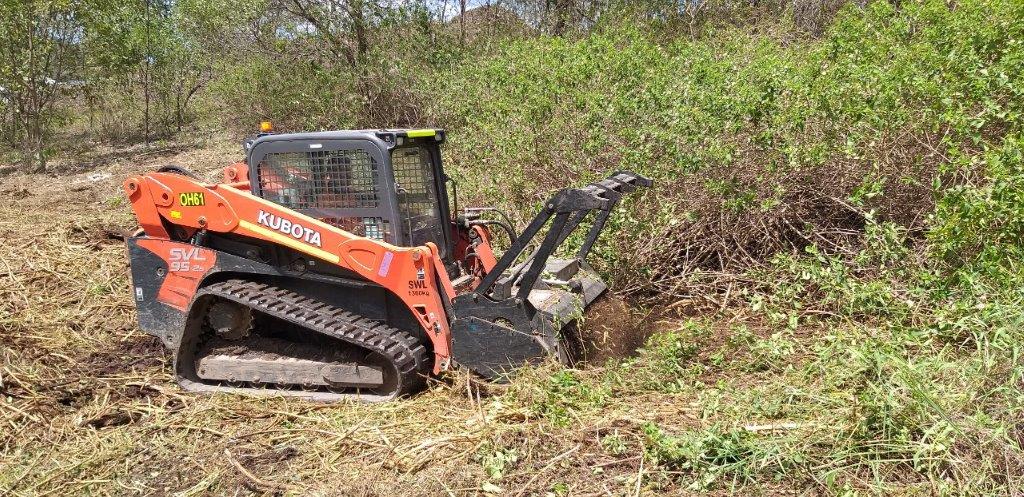
On flatter country, for example, a Posi-Track fitted with a forestry mulcher may provide better coverage where terrain and tree density allow suitable access. Forestry mulchers are designed to process vegetation as the machine moves through the site, making them useful for broader treatment areas.
The important point is not simply which machine can clear the most vegetation. It is choosing the machine, attachment and operating method that best suit the site's terrain, vegetation and restoration objectives.
What the Project Achieved
At Mount Walker, the mechanical approach provided several practical benefits:
- Efficient treatment of dense Lantana infestations
- Protection of native vegetation and existing natural regeneration
- Safer, more practical treatment of steep and difficult terrain
- Improved access for future visitors and ongoing maintenance
- Restoration of views from the ridgeline lookout
- Faster initial treatment with reduced labour requirements
The Real Win Is Consistent Maintenance
Anyone working in ecological restoration will recognise a simple reality: the more you open up, the more you need to maintain.
Mechanical treatment can achieve a significant amount in a day under the right conditions, but the initial knockdown is only the beginning.
Lantana and other weeds can reshoot, sucker or regenerate from seed. Opening previously dense vegetation can also expose disturbed soil and dormant seedbanks. The response may be positive, with suppressed native species beginning to regenerate, or it may favour fast-growing weeds.
That is why the maintenance phase should be considered from the beginning of the project—not after the machinery leaves.
Where regeneration is the objective, the restoration budget should include an appropriate allowance for follow-up works. Targeted secondary treatments, including selective herbicide application where appropriate, can control emerging weeds while giving desirable native regeneration the opportunity to establish.
Mechanical Clearing as Part of a Restoration Strategy
Mechanical weed control is not a replacement for skilled bush regeneration. Used well, it is another tool within it.
For the right site, specialised machinery can make previously difficult or uneconomic areas practical to treat. The key is combining machinery with experienced operators, sound vegetation knowledge, selective treatment and a realistic maintenance program.
At Bushcare, our focus is on finding that balance—achieving the scale and efficiency machinery can provide while retaining the regeneration value that supports long-term recovery.
Images
Frequently Asked Questions
When is mechanical weed control suitable?
Mechanical weed control can be effective on sites with dense weed infestations, difficult terrain or extensive treatment areas. The machinery, attachment and operating method should be selected according to the site’s terrain, vegetation and restoration objectives.
Why are follow-up works important after mechanical clearing?
The initial treatment is only the beginning. Weeds may reshoot or regenerate from seed, while disturbed areas can encourage either native regeneration or further weed growth. A planned maintenance program helps control emerging weeds and supports desirable native vegetation.